Web Design in Montreal: Costs, Timelines, and How to Choose the Right Partner
Published
Hiring a web design partner in Montreal typically costs between $2,500 and $25,000+ CAD depending on whether you choose a freelancer, boutique agency, or full-service firm, and projects run 4 to 16 weeks from brief to launch. The right choice depends on your budget, the complexity of your site, and whether you need ongoing marketing support alongside design.
If you're a Montreal business owner evaluating your options right now, this guide gives you what most agency pages won't: real pricing ranges, honest timeline expectations, Quebec-specific legal context, and a practical checklist for vetting any provider before you sign.
Key Takeaways
- Montreal web design projects range from roughly $2,500 CAD (freelancer, simple site) to $25,000+ CAD (full-service agency, custom build) in 2026.
- Most professional small business websites take 6–12 weeks from discovery to launch. Rushed timelines are a red flag.
- Quebec businesses must consider Bill 96 / Loi 25: French-language content requirements apply to your website copy and digital communications.
- Freelancers suit tight budgets and simple sites; boutique agencies offer broader expertise and accountability for growing businesses.
- A well-evaluated agency portfolio shows measurable results, not just attractive visuals. Ask for client outcomes, not just screenshots.
- SEO and digital marketing should be baked into your website from day one, not bolted on later.
What Does the Montreal Web Design Market Actually Look Like?
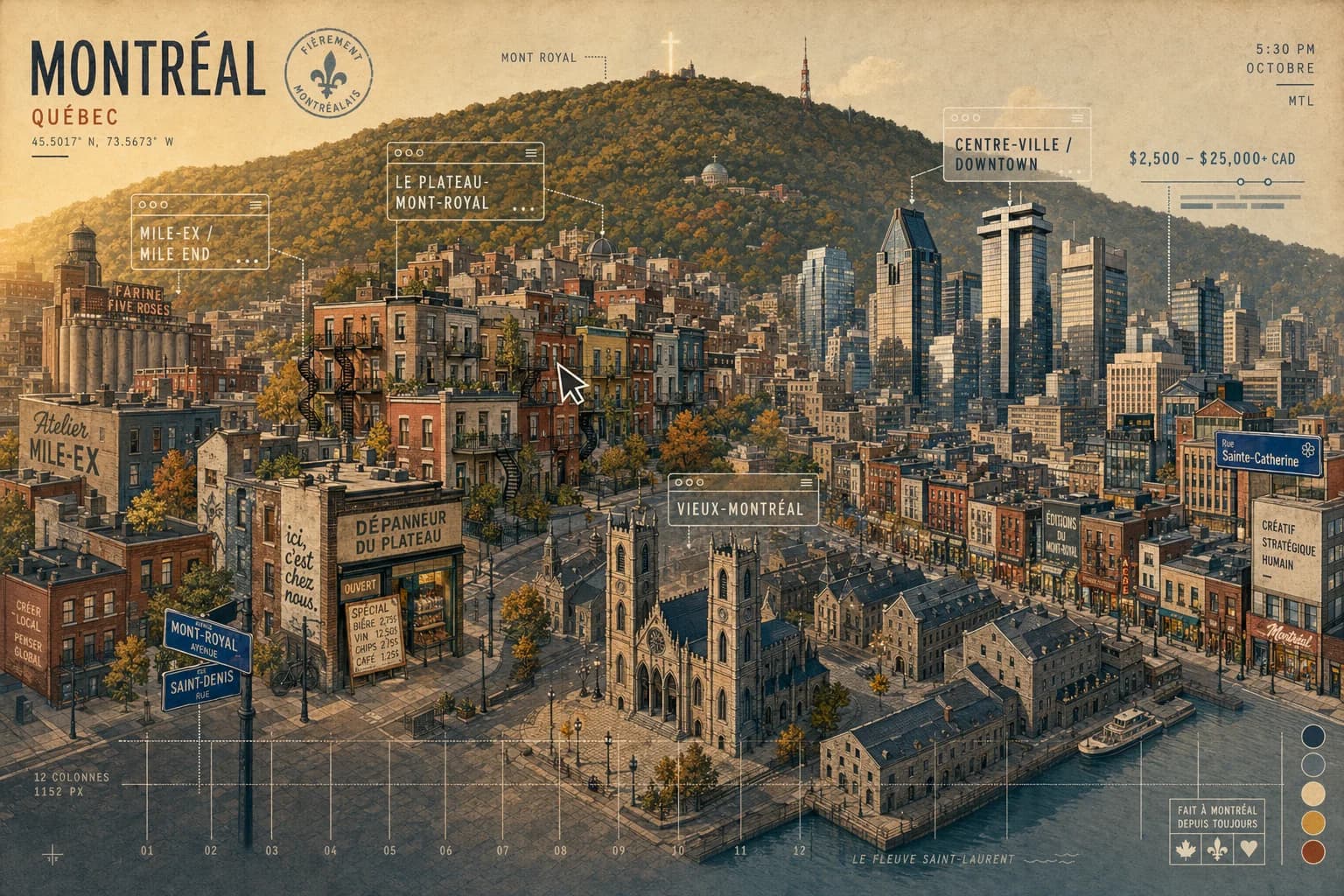
Montreal's web design market is genuinely competitive. The city's tech corridor in Mile-Ex, the creative studios scattered across the Plateau, the enterprise agencies downtown, and the boutique shops in Old Montreal together make up one of the most diverse digital service ecosystems in Canada. That's good news for buyers. It also means the quality gap between providers is enormous.
You're shopping in a market that includes solo freelancers working out of co-working spaces, mid-size bilingual agencies serving Quebec's francophone business community, national firms with Montreal offices, and internationally-staffed shops that list a Montreal address but do most of their work offshore. Knowing which category a provider falls into matters more than their website.
Montreal's business community is also genuinely trilingual in practice. Many business owners here operate in French, English, and sometimes a third language, and their customers do too. Any web design partner worth hiring should understand that context without needing it explained.
Freelancer, Boutique Agency, or Large Agency — Which Is Right for Your Business?
This is the decision most buyers get stuck on. Here's a straightforward breakdown.
| Freelancer | Boutique Agency | Large Agency | |
|---|---|---|---|
| Typical cost (CAD) | $2,500–$7,500 | $7,500–$20,000 | $20,000–$60,000+ |
| Project timeline | 4–8 weeks | 6–12 weeks | 10–20+ weeks |
| Best for | Simple informational sites, tight budgets, early-stage businesses | Growing SMBs needing strategy + design + some ongoing support | Enterprise, complex custom builds, large-scale e-commerce |
| Strengths | Direct communication, lower cost, flexibility | Broader skill set, accountability, team backup if someone's sick | Deep specialisation, large teams, SLA-backed support |
| Weaknesses | No team backup, limited capacity, often no strategy | Higher cost than freelancers, varies widely in quality | Slower, expensive, SMBs often deprioritised |
| Bilingual capability | Varies — ask specifically | Often yes, especially Montreal-based shops | Usually yes |
| SEO/marketing integration | Rarely built in | Depends on the agency — ask | Usually a separate team/upsell |
The honest summary: if your site is five pages and you need it done for under $5,000 CAD, a vetted freelancer is a reasonable option. If your business depends on its website to generate leads and you want someone accountable beyond launch day, a boutique agency is almost always the better investment. Large agencies serve a real purpose, but most small Montreal businesses are not their priority client.
How Much Does Web Design Cost in Montreal in 2026?
No competitor in this space publishes real numbers. Here's what you'll actually pay.
| Project Type | Provider Type | Estimated Cost (CAD) | What's Included |
|---|---|---|---|
| Basic informational site (3–5 pages) | Freelancer | $2,500–$5,000 | Design, development, basic contact form, mobile-responsive |
| Standard small business site (5–10 pages) | Freelancer or boutique | $5,000–$12,000 | Design, CMS setup (usually WordPress), basic on-page SEO, contact/lead form |
| Growth-focused SMB site with strategy | Boutique agency | $10,000–$20,000 | Discovery, UX planning, design, development, SEO foundation, copywriting support |
| E-commerce (Shopify or WooCommerce) | Boutique agency | $8,000–$25,000+ | Product pages, payment integration, inventory setup, performance optimisation |
| Custom web application or enterprise site | Large agency | $25,000–$60,000+ | Custom development, complex integrations, ongoing retainer |
A few things to keep in mind when reviewing quotes:
- Copywriting is often not included. Many agencies quote design and development but expect you to provide all text. If you need help with copy (especially bilingual French/English copy), budget an additional $1,500–$4,000 CAD for a professional copywriter.
- Hosting and domain are usually separate. Budget $200–$600 CAD per year for quality managed hosting.
- Ongoing maintenance matters. A website without a maintenance plan is a liability. Ask what post-launch support costs.
For a broader look at Canadian website pricing across project types, see our guide to how much a website costs in Canada.
How Long Does a Web Design Project Take in Montreal?
Timelines depend on project scope, how quickly you can provide feedback, and how backlogged your chosen provider is. Here are realistic expectations.
-
Simple informational site (3–5 pages) with a freelancer: 4–6 weeks from signed contract to launch. This assumes you can provide content (copy, images, brand assets) within the first week and respond to review rounds within 48 hours.
-
Standard small business site (5–10 pages) with a boutique agency: 6–10 weeks. Expect a discovery session in week one, a design review around week three or four, a development phase, and a round or two of revisions before launch.
-
E-commerce or content-heavy site: 10–14 weeks is realistic. Payment integrations, product setup, and testing add significant time.
-
Custom build or complex web application: 14–20+ weeks. These projects involve more stakeholder sign-off, technical scoping, and QA cycles.
The biggest timeline variable isn't the agency — it's you. Client delays in providing copy, brand assets, or timely feedback are the leading cause of blown project timelines. Come prepared.
Do Montreal Businesses Need a Bilingual Website — and What Does Bill 96 Mean for You?
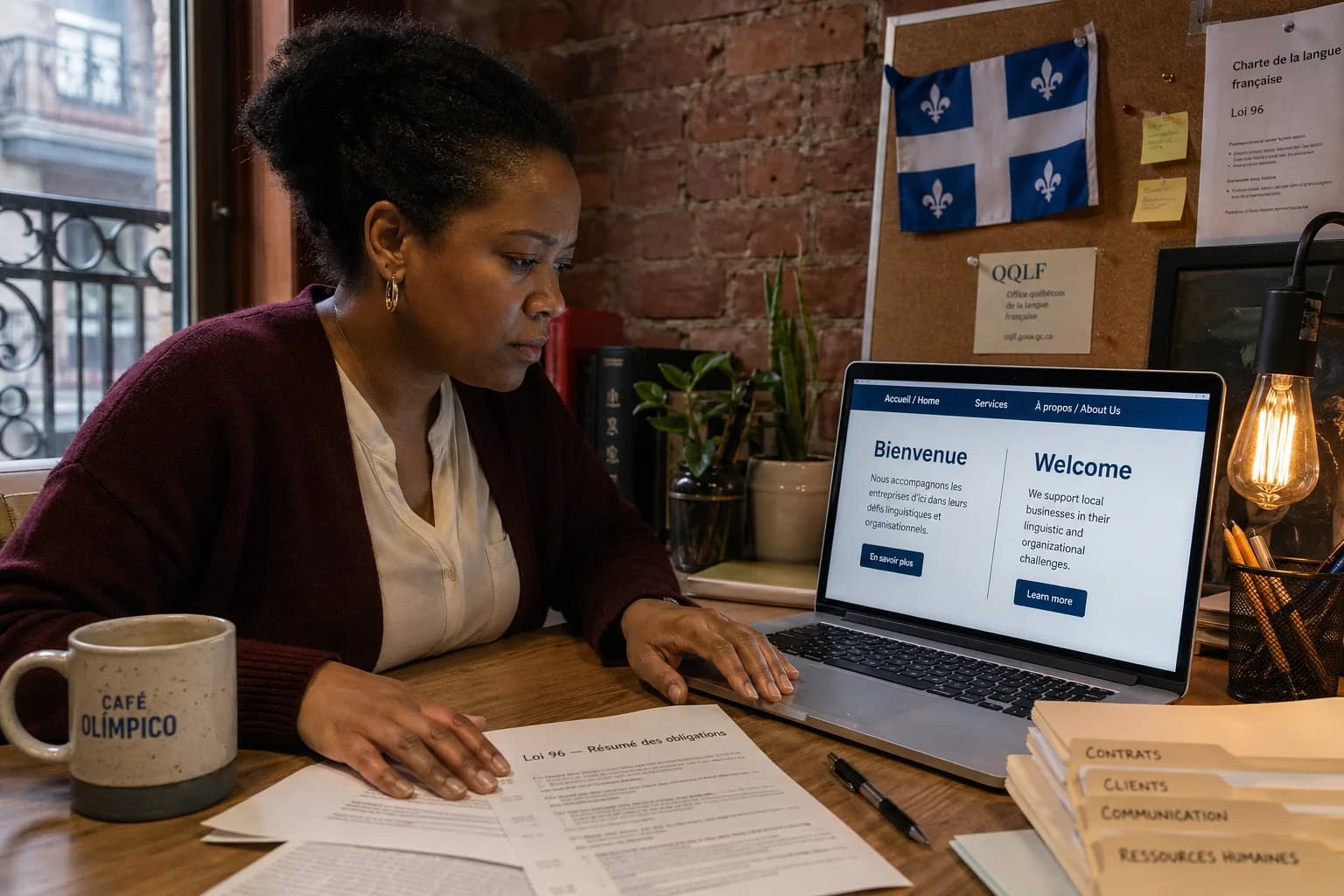
The short answer: you're not always legally required to have a bilingual website, but for most Montreal businesses it's both a practical necessity and an increasingly regulated area.
Bill 96 (the official name is An Act respecting French, the official and common language of Québec, amending the Charter of the French Language) came into force in stages starting in 2022. For businesses operating in Quebec, it reinforces that French must be the primary language of commercial communications, including, in many interpretations, website copy that targets Quebec consumers. [FACT_CHECK: Verify current enforcement scope of Bill 96 re: website language requirements as of 2026, particularly for businesses with fewer than 25 employees.]
What this means practically for your website:
- If you serve Quebec consumers, your site should have a French version — at minimum, a French-primary version with English available.
- Auto-translated content (Google Translate-style) is not the same as a properly localised French website. Francophone visitors notice it immediately, and it signals low trust.
- Cookies, privacy notices, checkout flows, and form confirmations should all be available in French.
Beyond the legal angle, Montreal's market reality is simpler: roughly half your potential customers are more comfortable browsing in French. A site that only speaks to anglophones is leaving real revenue on the table.
When evaluating any web design partner, ask specifically whether they have experience building and maintaining bilingual Quebec websites. Getting this right requires more than translating text — URL structures, SEO metadata, hreflang tags, and CMS workflows all need to be configured correctly from the start.
What Types of Web Design Services Are Available in Montreal?
Understanding the service categories helps you scope your project accurately before you start collecting quotes.
-
Custom web design: Built from scratch to your brand specifications. Higher cost and longer timeline, but no template constraints. Best for businesses with strong brand identities or complex layout needs.
-
WordPress design and development: The most common choice for service-based small businesses. Flexible, well-supported, and excellent for SEO when set up correctly. Most Montreal boutique agencies work primarily in WordPress.
-
E-commerce design (Shopify or WooCommerce): Shopify is the default recommendation for businesses selling physical products — easier to manage, with strong payment and inventory integrations. WooCommerce (built on WordPress) suits businesses that want more flexibility or already have a WordPress site. For a deeper comparison, see our article on WordPress vs. Shopify for small businesses.
-
UX design and brand identity: Some agencies lead with user experience strategy before any development begins — wireframes, user flows, and conversion-focused architecture. If your business has struggled with high bounce rates or low form completions on a previous site, this investment tends to pay for itself.
-
Accessibility-focused design: WCAG 2.1 compliance is increasingly expected, particularly for businesses in regulated industries or those serving the public sector. Quebec's accessibility standards are also evolving. Ask any potential partner how they handle accessibility from the start, not as an afterthought.
-
Landing page design: Running paid advertising? A purpose-built landing page (separate from your main site) can dramatically improve conversion rates. Some agencies offer these as standalone projects.
How Do You Evaluate a Montreal Web Design Agency's Portfolio and Credibility?
A portfolio of attractive websites tells you almost nothing useful. Here's what to look for instead.
-
Ask for client outcomes, not just screenshots. Did the new website increase leads? Improve conversion rates? Rank for local search terms? A credible agency should be able to point to at least a few examples where the work drove a measurable business result, not just a visual refresh.
-
Look for industry diversity — with some local relevance. A portfolio that's all restaurant websites, or all enterprise clients, tells you something about fit. You want to see that they've worked with businesses similar to yours in size and sector.
-
Check that their sites are actually performant. Load any portfolio site on your phone and run it through Google's PageSpeed Insights. If an agency's showcase work is slow on mobile, that's a direct indicator of how they'll treat your site. [FACT_CHECK: Confirm current Google PageSpeed benchmarks as of 2026.]
-
Verify their references. Ask for two or three past client contacts you can speak with directly. A confident agency will provide these without hesitation. Ask the references: Did the project come in on time? On budget? Do you own your files and domain?
-
Check their own digital presence. Does the agency rank on Google for relevant terms? Do they have genuine Google Business reviews? A web design agency that can't maintain its own digital presence is a meaningful data point.
-
Look for longevity and local footprint. How long have they been in business? Do they have a verifiable Montreal address? Are they listed with the Chamber of Commerce of Metropolitan Montreal (CCMM) or have other local credibility signals?
What Red Flags Should You Watch For When Hiring a Montreal Web Designer?
Most buyers only discover these problems after signing. Watch for all of them before you do.
-
Vague contracts with no deliverables listed. Any professional contract should specify exactly what pages will be built, what's included in the design scope, how many revision rounds you get, and what happens if timelines slip. "We'll build you a website" is not a contract.
-
No clear ownership clause. You should own your domain, your hosting account, and all website files outright at project completion. Some providers retain ownership of the theme, code, or design assets as leverage to keep you paying. Ask explicitly: "At the end of this project, will I own 100% of my website files and code?"
-
Guaranteed Google rankings. Nobody can guarantee specific search rankings. Any provider who promises "page one of Google" as part of their sales pitch is either uninformed or misleading you.
-
No discovery process before quoting. A legitimate web design project should involve some kind of scoping conversation before a price is set. If someone gives you a firm quote on a discovery call without asking about your goals, audience, or existing marketing, the quote is not based on your actual needs.
-
Undisclosed offshore outsourcing. Outsourcing isn't inherently a problem — but when a provider presents themselves as a local Montreal agency and then hands your project to an overseas team without telling you, you lose the accountability and communication you thought you were paying for. Ask directly: "Who will be doing the design and development work?"
-
No local references or verifiable presence. If a provider can't name a single Montreal or Canadian business you can call as a reference, proceed cautiously.
Should Your Web Design Include SEO and Digital Marketing from the Start?
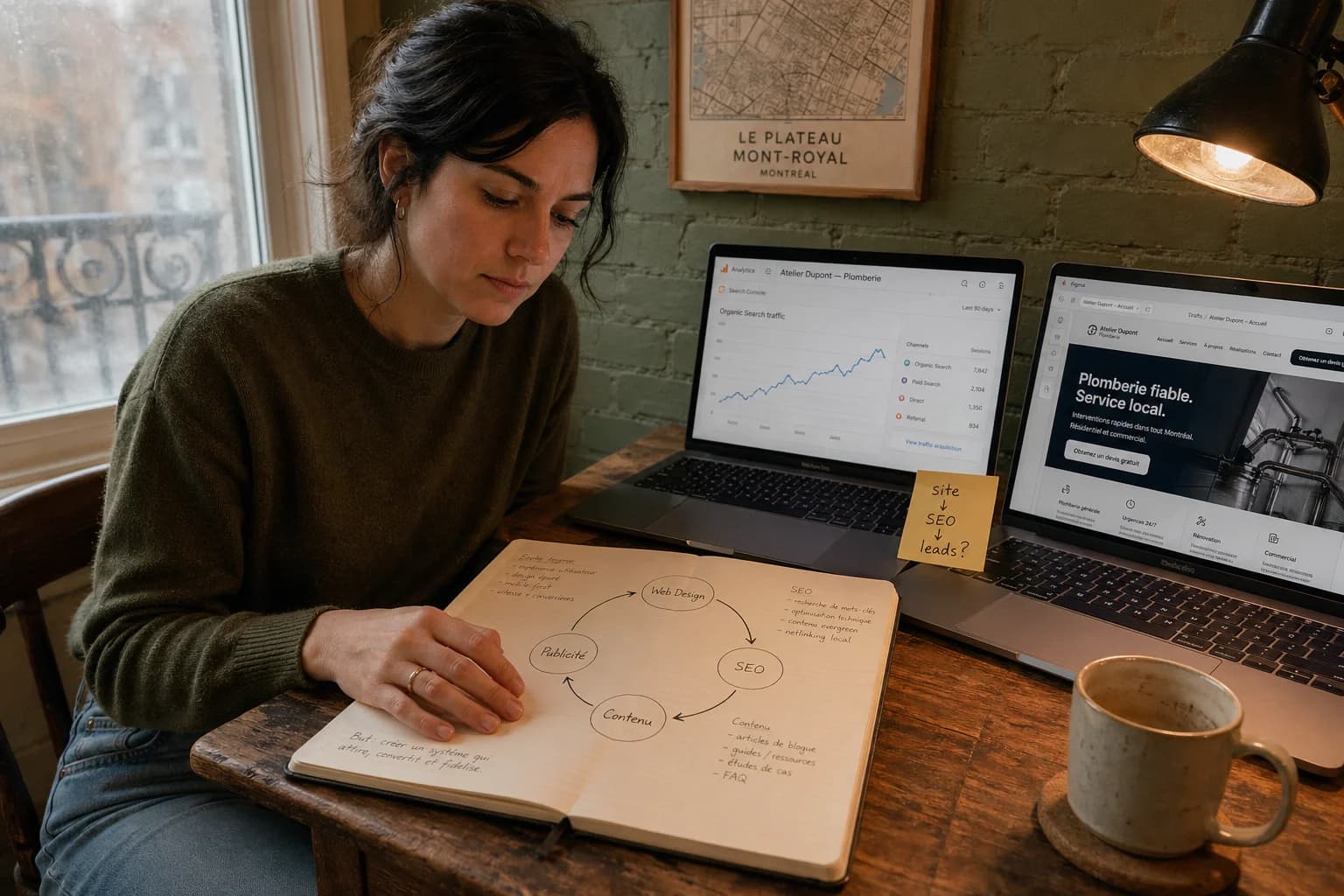
Yes — and retrofitting SEO onto a poorly structured website is one of the most common and expensive mistakes small businesses make. We see it constantly.
The technical foundation of your website (URL structure, page speed, mobile responsiveness, metadata, internal linking architecture, schema markup) directly affects how Google indexes and ranks your content. These decisions are made during development. Changing them after launch means rework, and rework costs money.
The same logic applies to conversion. A website designed without any thought to what visitors should do next — call, book, fill out a form, buy something — will generate traffic without generating business. Design and marketing strategy need to be in the same room from day one.
When evaluating web design partners, ask whether SEO requirements are built into their development process by default or treated as a separate add-on. Ask whether they consider your target keywords when structuring page hierarchy and content. Ask what analytics setup is included at launch.
A website that looks good but doesn't perform in search and doesn't convert visitors is an expensive brochure. That's not what you need.
For businesses ready to grow beyond launch, see how our SEO services connect directly to your website's foundation.
Your Pre-Hire Checklist: Questions to Ask a Montreal Web Design Company
Use this list in every discovery conversation. The answers will tell you more than any portfolio.
-
Who will own the website files, domain, and hosting account at the end of the project? You should own all of it, with no vendor lock-in.
-
Will my site be mobile-optimised and tested across devices? Get this confirmed in writing, not verbally.
-
What does your SEO setup process include at launch? Look for: page titles and meta descriptions, Google Search Console setup, XML sitemap, and basic analytics configuration as a minimum.
-
Do you have experience building bilingual (French/English) websites for Quebec businesses? If they have no experience with Quebec-specific requirements, that's a gap to take seriously.
-
What does your revision and feedback process look like? How many rounds are included? What happens if you need more?
-
What does post-launch support look like, and what does it cost? Bugs happen. You need to know who to call and what the response time is.
-
Can you provide two or three past client references I can speak with directly?
-
What are the payment terms? A reasonable structure is roughly 30–40% upfront, milestone payments during the project, and a final payment on launch. Be wary of 100% upfront or 100% on completion.
-
How do you handle project delays — from either side?
-
What's your process before quoting? Do you do a proper discovery session?
Frequently Asked Questions About Web Design in Montreal
How much does web design cost for a small business in Montreal?▼
What is the difference between hiring a freelance web designer and a web design agency in Montreal?▼
Do I need a bilingual (French and English) website in Montreal?▼
How long does it take to build a business website in Montreal?▼
What platform should my Montreal business website be built on — WordPress, Shopify, or custom?▼
What questions should I ask a Montreal web design company before hiring them?▼
What are red flags to watch for when hiring a web designer in Montreal?▼
Can a web design company in Montreal also handle SEO and digital marketing?▼
Tired of evaluating options and going in circles?